Since 1995, Mr. Pickle’s has kept fans coming back for fresh-baked Dutch Crunch rolls and hand-sliced proteins. That loyalty built a devoted West Coast following. Today the brand is growing with a refreshed, tech-forward QSR model and open territory for new owners.
If you are shopping for the best sandwich franchise, focus on fit over size. The real question is which sandwich franchise is the right one for you to own, not which chain is largest.
This guide walks you through what a shop costs and what it earns, plus how to read the numbers before you sign. Start with the brand’s history, then use the buyer’s checklist below to compare any opportunity on your list.
Key Takeaways
- The best sandwich franchise for you fits your budget and shows transparent earnings in an open territory nearby.
- Opening a Mr. Pickle’s shop runs $360,700 to $834,607, per Mr. Pickle’s 2025 Franchise Disclosure Document (FDD).
- Item 19 earnings figures report gross sales, not profit. Your take-home pay depends on your own costs.
- Open territory can matter more than brand size when you choose where to grow.
- Federal law gives you the right to review the FDD before you pay or sign anything.
What Makes a Sandwich Franchise Worth Owning
The best sandwich franchise is the one that fits your budget and sits in an open territory near you. It also gives you real training and support while showing transparent earnings. The biggest chain is not automatically the smartest choice for a first-time owner.
A few plain-language terms help here. A franchise is a license to run a business under an established brand’s name and proven systems. This makes you the franchisee. In return, you pay the franchisor—the brand you’re licensing—set fees.
A royalty is an ongoing fee, usually a percentage of your sales, that pays for continued brand use and support. The FDD, or Franchise Disclosure Document, is the legal packet a franchisor must give you before you buy, and it spells out costs and rules.
Why the Sandwich Franchise Category Still Has Room
Franchising is a large part of the US economy, and it only keeps growing. US franchise output is projected to reach $921.4 billion in 2026, supporting roughly 845,000 franchise establishments and nearly 8.9 million jobs, per the IFA’s 2026 Franchising Economic Outlook.
Sandwiches are a core part of the quick-service world, with steady everyday demand from lunch crowds and families. Big national chains fill many markets, but plenty of neighborhoods still lack a strong local sandwich option.
That gap is where a growing regional brand can win. Mr. Pickle’s has decades of demand behind it and open markets still ahead, which gives new owners room to plant a flag.
The numbers also point to durable demand. Franchise establishments and jobs are both expected to keep climbing into 2026, per the IFA’s outlook. Sandwiches also remain a daily habit rather than a passing trend, which lowers the risk of betting on a fad.
What It Costs to Open a Sandwich Franchise
What a sandwich franchise costs depends on the brand, the size of the shop, and your location. A small counter-service spot costs less to open than a large build-out in a pricey market.
Mr. Pickle’s shares its numbers openly, so you can use them as a real example while you compare offers. Two buckets make up the total: the one-time costs to open your doors, and the ongoing fees you pay while you operate.
Upfront Investment
According to Mr. Pickle’s 2025 Franchise Disclosure Document (FDD), the total initial investment for a single shop runs $360,700 to $834,607. That range covers the initial franchise fee of $35,000. It also pays to build out and equip the shop, add signage, and stock your opening inventory and working capital. Like many franchises, Mr. Pickle’s does not offer direct financing. Plan to line up funding through a lender or your own capital before you commit.
Ongoing Fees
Beyond the upfront cost, you pay ongoing fees as a percentage of your gross sales. Per Mr. Pickle’s 2025 FDD, the royalty is 5% of gross sales, and it funds the training and support systems you get as an owner.
The marketing fund fee is currently 2% of gross sales and can rise to 5%, and it pays for brand-level advertising. Mr. Pickle’s also requires 1% of gross sales toward advertising in your own local market.
Build these percentages into your projections early. Because they scale with sales, a busy shop pays more in real dollars, so model your fees against realistic revenue rather than a best-case number.
How Profitable Is a Sandwich Franchise?
Franchisors do not publish profit figures. Instead, they may share sales data in Item 19 of the FDD, and profit depends on how well you control your own costs. A high sales number is a starting point, not a promise of take-home pay.
Mr. Pickle’s is specific here. Per Mr. Pickle’s 2025 FDD, across 52 franchised shops open for all of 2024, average sales were $1,014,318 and median sales were $961,757.
The highest shop reported $1,828,190 in sales and the lowest reported $470,223, while the top third of shops averaged $1,370,834 in unit volume. These figures are gross sales, not profit, so your earnings depend on how you manage rent and labor against food costs and the fees above.
A wide sales range like this one is normal, and it tells you location and operations both matter. The lowest-performing shop and the highest-performing shop follow the same recipes, so the difference often comes down to the owner. When you read any Item 19, look at the median and the bottom third, not only the average.
To see how sandwiches stack up against other quick-service options, you can read this story, where we compare profitability by franchise segment.
How to Choose the Best Sandwich Franchise
A smart choice comes from a clear checklist, not a gut feeling. Mr. Pickle’s offers a full guide on how to evaluate a franchise, but the points below cover what matters most for a sandwich shop:
Open Territory and Available Markets
Open territory can matter more than brand size. A giant chain may already have a shop on every busy corner, which leaves little room for a new owner to grow.
Mr. Pickle’s still has open markets across the West Coast, plus expansion space in Nevada, Arizona, Texas, and other growing states. Getting in early in an open market gives you the first pick of strong locations.
Menu and Product Differentiation
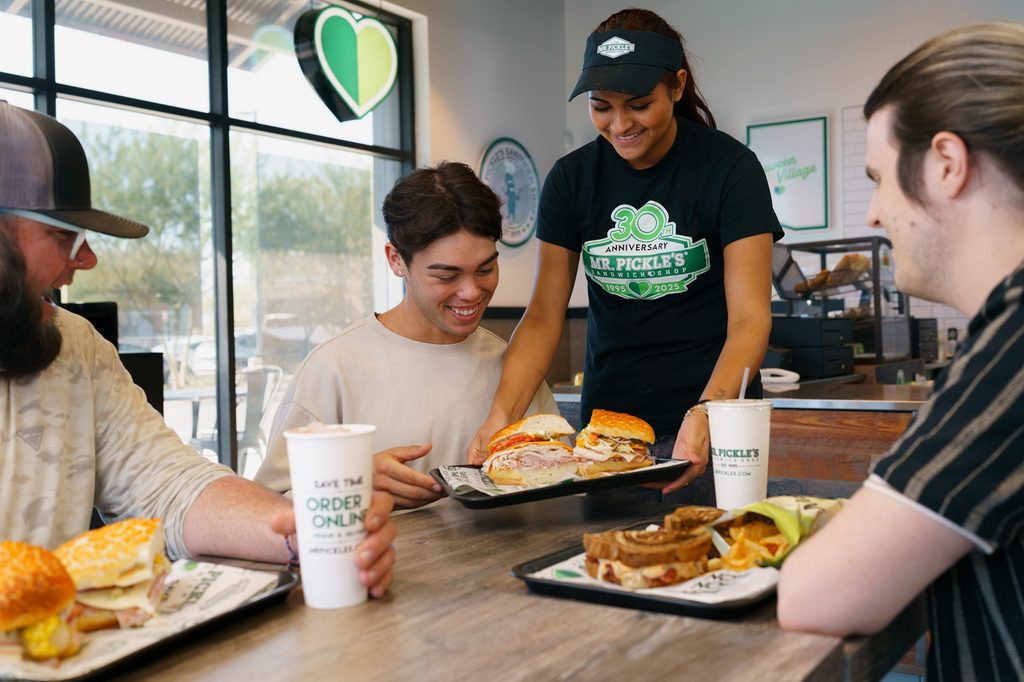
A signature product keeps guests coming back. Mr. Pickle’s is known for its fresh-baked Dutch Crunch rolls, paired with premium proteins and fresh-cut veggies that are hard for a generic chain to copy.
A menu that fans crave drives repeat visits, and repeat visits drive steady sales. That craveable identity is a real competitive moat for an owner.
Ask whether a brand’s signature item is something guests cannot easily get elsewhere. A product people drive across town to eat gives you pricing power and word-of-mouth that generic chains struggle to match.
A Tech-Forward Operating Model
Technology shapes how smoothly a shop runs day to day. Digital ordering and loyalty tools, along with back-office software, help owners keep service fast and orders accurate.
Mr. Pickle’s built its refreshed QSR model around these tools to support speed and consistency as owners scale. Faster service and fewer order errors protect both your labor budget and your guest experience.
Here is how Michael Nelson, CEO of Mr. Pickle’s, frames it.
“The right technology takes the guesswork out of daily operations. When ordering and loyalty tools share the same data, owners spend less time firefighting and more time growing sales.”
Reading the FDD Before You Sign
The FDD is your best research tool, so learn to read it before you sign. The FTC Franchise Rule requires franchisors to provide a disclosure document containing 23 specific items of information. Those items spell out the fees you will pay and the franchisor’s litigation history, along with its finances and a roster of current owners.
You also get time to review it. The 14 calendar-day disclosure rule means franchisors must provide the FDD at least 14 calendar days (not business days) before you sign a binding agreement or make any payment. Use that window to read every item and ask questions.
Item 19 and Item 7 deserve extra attention, since they cover earnings claims and startup costs. Many buyers also hire a franchise attorney or accountant to review the document, which is money well spent before a six-figure commitment.
How the Best Sandwich Franchises Compare to the Mega-Chains
Mega-chains like Subway offer instant name recognition, but that size comes with trade-offs. Many markets are already packed with their shops, which limits your room to grow.
Dense networks can also pit one franchisee against another for the same customers. A regional brand with open territory offers a different path.
You get an established name with decades of demand, plus markets that are still open for new owners. Lower unit counts also mean you are less likely to compete against another franchisee down the street. Consider just how many sandwich mega-chains (Subway, Jimmy John’s, etc.) you’ve seen in your town, often within minutes from one another.
Ed Yancey, Chief Development Officer at Mr. Pickle’s, offers this take.
“Fit beats size for a first-time owner. A brand with open territory and hands-on support can outperform a giant that has no room left to grow.”
Frequently Asked Questions
How Much Does It Cost To Open a Sandwich Franchise?
Costs vary by brand and location. For Mr. Pickle’s, the total initial investment runs $360,700 to $834,607, per Mr. Pickle’s 2025 Franchise Disclosure Document (FDD). Multi-unit franchisees are also subject to an Area Development Fee, ranging from $20,000 to $240,000.
Are Sandwich Franchises Profitable?
Profit depends on your sales and how well you control costs. Franchisors disclose sales rather than profit, so review the FDD’s Item 19 and build your own budget.
What Is the Best Sandwich Franchise To Own?
The best sandwich franchise is the one that fits your budget and sits in open territory near you, backed by strong support and transparent earnings.
How Long Is the FDD Review Period?
Under the FTC’s rules, you must receive the FDD at least 14 calendar days before you sign a binding agreement or make any payment.
Do Sandwich Franchisors Offer Financing?
Many do not. Mr. Pickle’s 2025 FDD states that the franchisor does not offer direct financing, so plan to fund your shop through a lender or your own capital.
Ready to Explore Your Sandwich Franchise Opportunity
Mr. Pickle’s brings together a legacy brand and emerging energy, with 30 years of fan loyalty and open territory for new owners. If you want a sandwich franchise with a proven menu and room to grow, this is a strong place to start.
Learn the full story and review the numbers before you take the next step. The path to ownership starts with a simple conversation, followed by an FDD review and a Franchise Experience Day.
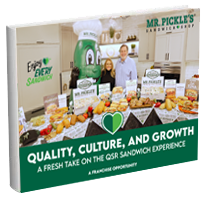
Get Our FREE eBrochure to dig into the opportunity and see if Mr. Pickle’s fits your goals.